


Our Structured Engineering Methodology
We implement automation systems based on disciplined architectural principles designed to ensure clarity, ownership, and long-term maintainability.


Why Structure Matters
Many automation systems become difficult to maintain not because of hardware limitations, but due to unstructured software design.
Poor separation of responsibilities, duplicated logic, and undefined ownership lead to long-term instability and increased engineering costs.


Core Architectural Principles
• Layered separation between I/O, device logic, and application control
• Defined ownership and one-writer rule enforcement
• Modular and encapsulated functional blocks
• Standardized naming conventions and data structures
• Structured fault handling and diagnostic hierarchy
• Clear separation between configuration, process, and result data
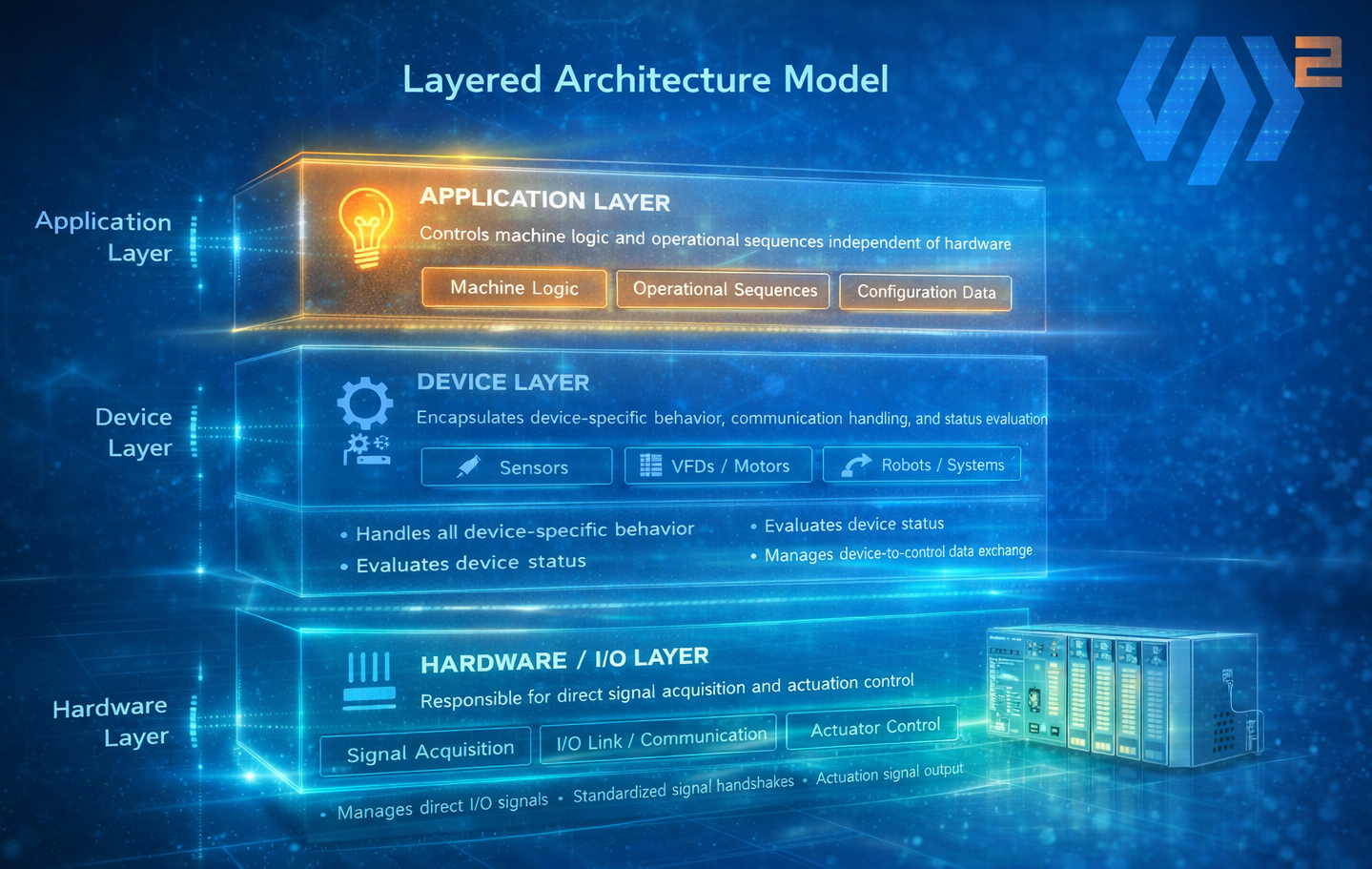
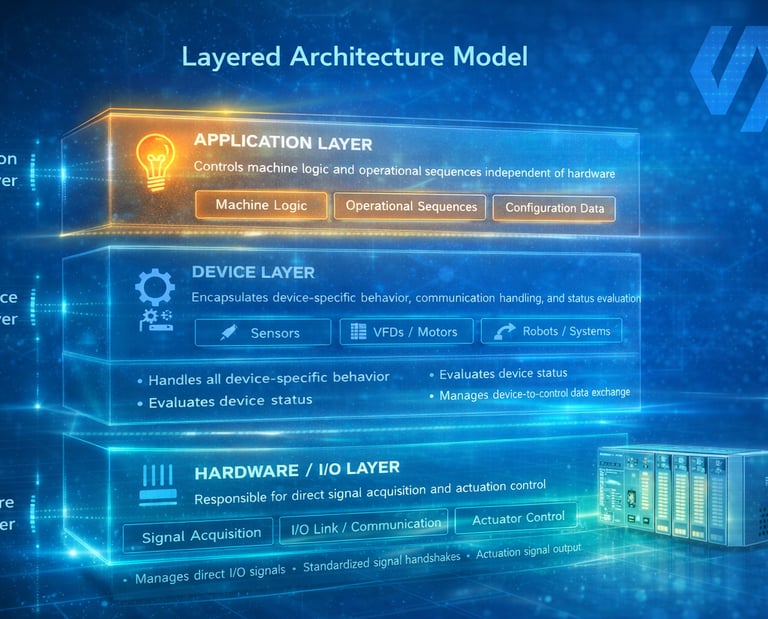
Layered Architecture Model
Our systems are structured in defined layers to prevent cross-dependencies and logic overlap.
Hardware / I/O Layer: Responsible for direct signal acquisition and actuation control.
Device Layer: Encapsulates device-specific behavior, communication handling, and status evaluation.
Application Layer: Controls machine logic and operational sequences independent of hardware implementation.
Defined Boundaries Prevent System Instability
Each layer has a defined responsibility and ownership model, reducing cross-dependencies and long-term engineering debt.
Aligned HMI Architecture
Operator interfaces reflect the underlying software structure, ensuring consistency between device logic, diagnostics, and visualization.
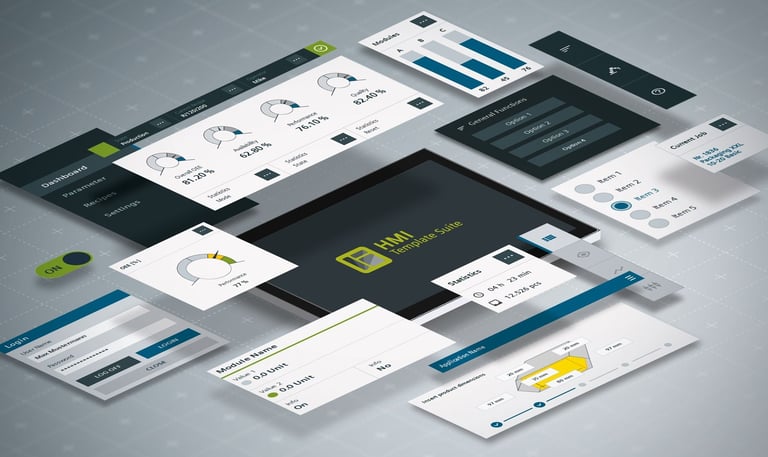
HMI design follows ISA-101 and ISA-18.2 guidelines to improve clarity and alarm management.
Long-Term Engineering Benefits
• Reduced debugging time
• Easier system expansion
• Simplified engineering handover
• Lower long-term maintenance cost
• Reduced dependency on individual programmers
We prioritize structural integrity over quick implementation. Systems built without clear architectural boundaries often become unstable and difficult to maintain.
Our methodology focuses on building systems correctly from the beginning to prevent future engineering debt.
If your organization values disciplined implementation and long-term technical stability, our methodology is designed to support your next automation initiative.
Our Position
Structured Systems Do Not Happen by Accident
Progressive Programming Mx
Contact
contact@progressiveprogramming.tech
LinkedIn Profile:












We have experience with brands like:
Confidentiality Notice
Due to confidentiality agreements, detailed technical documentation and client-specific information are not publicly disclosed.
Copyright © 2026 Progressive Programming. All rights reserved for original site content. Third-party images, trademarks, and brands are the property of their respective owners.